Agromet Advisories
Agricultural activities in various regions of India are significantly influenced by weather conditions, particularly during periods of heavy rainfall and associated events. The following advisories offer guidance to farmers on managing crops, orchards, and livestock to minimize potential damage. These recommendations focus on preventing waterlogging, supporting plants against strong winds, and ensuring proper drainage across different states. The advisories are organized by state for clarity, followed by general advice on livestock, fisheries, and measures for thunderstorms, gusty winds, or squally winds.
This information is derived from the Press Release issued by the India Meteorological Department on August 07, 2025
Advisories for Arunachal Pradesh
Farmers in Arunachal Pradesh should delay any new sowing or transplanting activities until heavy rainfall subsides. For nearly mature banana crops, harvesting is recommended, with the bunches stored in a secure, dry location for ripening. Adequate drainage systems should be maintained in fields of rice, maize, finger millet, soybean, vegetables, and fruit orchards to prevent water accumulation. In rice cultivation areas, reinforcing field boundaries is essential to avoid soil erosion and loss of seedlings. Additionally, sturdy supports should be provided to fruit trees to protect them from damage during intense rain.
Advisories for Assam
To address waterlogging risks in Assam, proper drainage is crucial in specific zones. In the Lower Brahmaputra Valley Zone, this applies to Sali rice, green gram, pigeon pea fields, and banana orchards. In the North Bank Plain Zone, drainage should be ensured in Sali rice and sugarcane fields. Similarly, in the Upper Brahmaputra Valley Zone, Sali rice fields require effective water management.
Advisories for Meghalaya
In Meghalaya, maintaining effective drainage in rice, maize, turmeric, chilli, okra, and bitter gourd fields is vital to avoid water stagnation. Tall or vulnerable crops such as banana, papaya, and bottle gourd should receive staking or other forms of support to prevent them from toppling over.
Advisories for Nagaland
Nagaland farmers are advised to establish appropriate drainage pathways in maize fields to handle excess surface water. In rice fields, existing drainage systems should be cleared to facilitate the removal of surplus water.
Advisories for Tripura
Proper drainage maintenance is recommended in Tripura for rice, chilli, and ginger fields to manage water levels effectively.
Advisories for Uttarakhand
In Uttarakhand, arrangements for removing excess water are necessary in various zones. In the Bhabar and Tarai Zone, this includes fields of already sown or transplanted rice, sugarcane, maize, black gram, green gram, groundnut, pigeon pea, finger millet, soybean, and vegetables. In the Sub Humid Sub Tropic Zone, drainage is advised for barnyard millet, finger millet, green gram, and black gram. In the Hill Zone, field boundaries should be reinforced to control surface water runoff, and sowing of vegetable pea should be postponed if soil conditions are overly saturated. Overall, crop fields require well-maintained drainage channels.
Advisories for Himachal Pradesh
In the Mid Hills Sub Humid Zone of Himachal Pradesh, suitable drainage channels should be provided in maize, ginger, and vegetable fields.
Advisories for Sub-Himalayan West Bengal
Provisions for draining excess water are essential in Sub-Himalayan West Bengal. In the Hill Zone, this covers rice, ginger, vegetable fields, and fruit orchards. In the Terai Zone, aman paddy and vegetable fields need similar attention. Chilli seedlings in the Terai Zone should be shielded with plastic covers to guard against heavy precipitation.
Advisories for Bihar
In Bihar, measures to remove surplus water from standing crops are recommended across zones. In the North West Alluvial Plain Zone, this involves maize fields and nurseries for onion, chilli, and cauliflower. In the North East Alluvial Zone, it applies to maize, finger millet, ragi, kodo, sava, and china crops. In the South Bihar Alluvial Zone, drainage is needed for maize, vegetables, ragi, kodo, and sava in low-lying areas, with field boundaries strengthened.
Advisories for Kerala
Adequate drainage should be ensured in Kerala for rice, coconut, banana, and ginger fields. Banana plantations require additional support, and vegetable structures should be reinforced for stability.
Advisories for Tamil Nadu
In Tamil Nadu, effective drainage is advised in sorghum fields to prevent waterlogging, particularly in heavy soils or low areas. Around coconut plants, proper drainage is necessary to reduce the risk of root rot.
Advisories for Karnataka
Drainage facilities should be maintained in Karnataka across zones. In the Coastal Zone, this includes arecanut and banana plantations. In the Hill Zone, it covers maize, cotton, ginger fields, and arecanut plantations. In the Southern Transition Zone, drainage is recommended for ginger, maize, finger millet, transplanted rice fields, and arecanut and coconut plantations.
General Advisories for Livestock and Fisheries
During heavy rainfall, animals should be housed indoors and given a balanced diet. Feed and fodder supplies need to be stored securely to avoid deterioration. For fish ponds, outlets equipped with netting should be built to manage overflow and prevent fish escapes.
Advisories for Thunderstorms, Gusty Winds, or Squally Winds
To mitigate impacts from strong winds, mechanical supports should be added to horticultural crops, and staking or other reinforcements provided to vegetables and young or fruit-bearing plants to prevent them from being uprooted.
Current Weather Situations
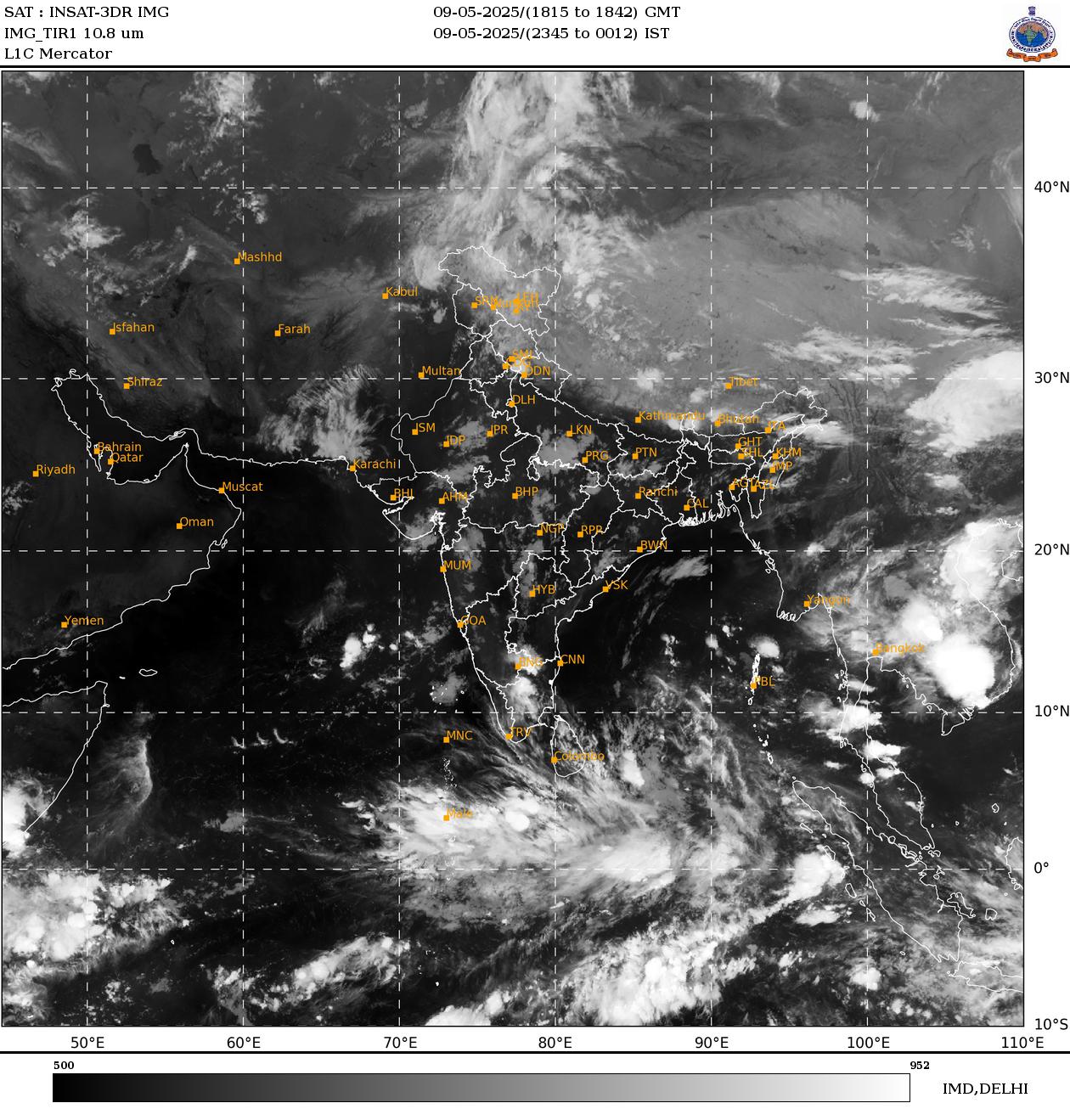
Latest Settelite Image recieved from India Meteorological Department.
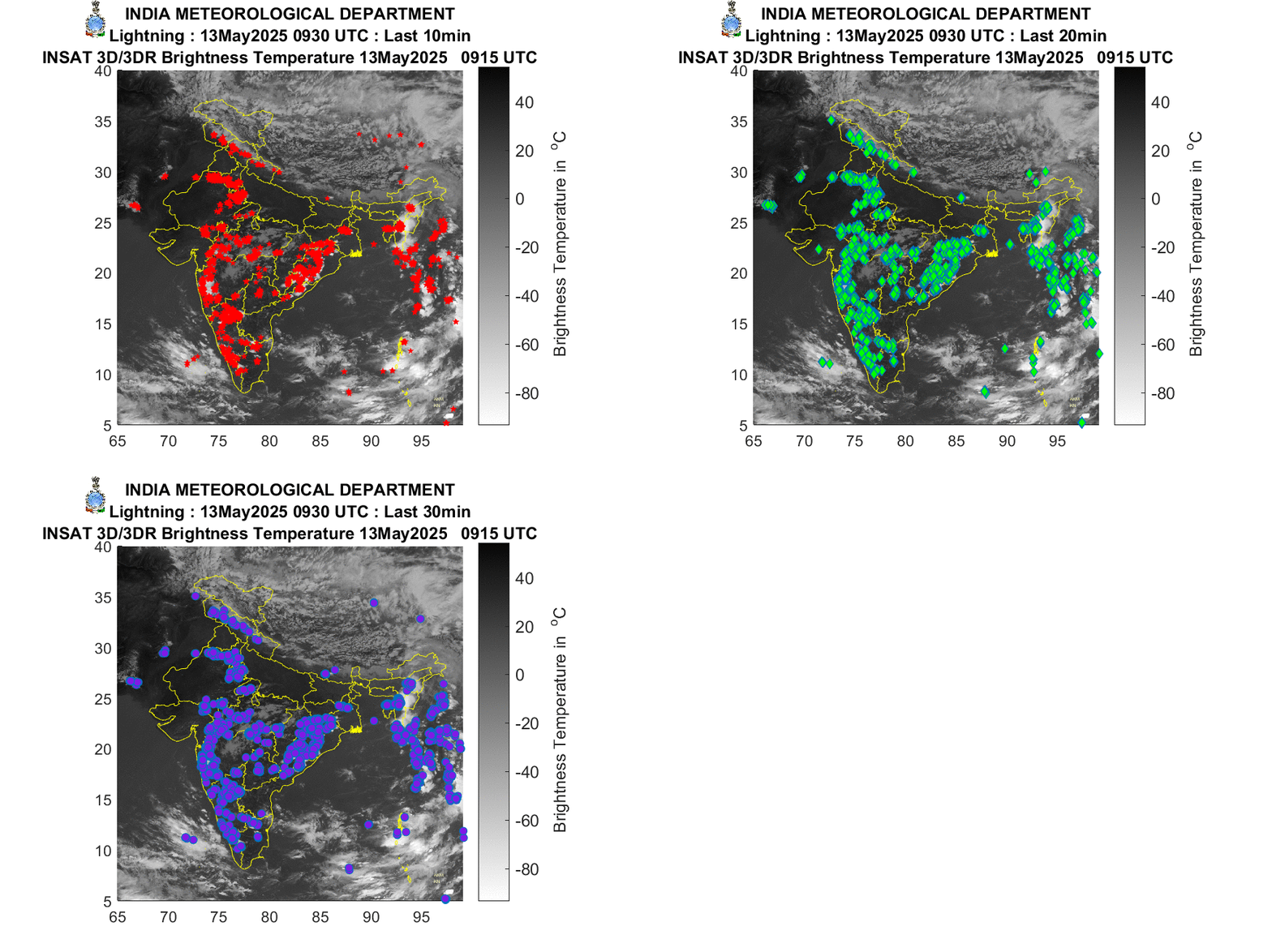
Latest Settelite Image recieved from India Meteorological Department showing lightening events.
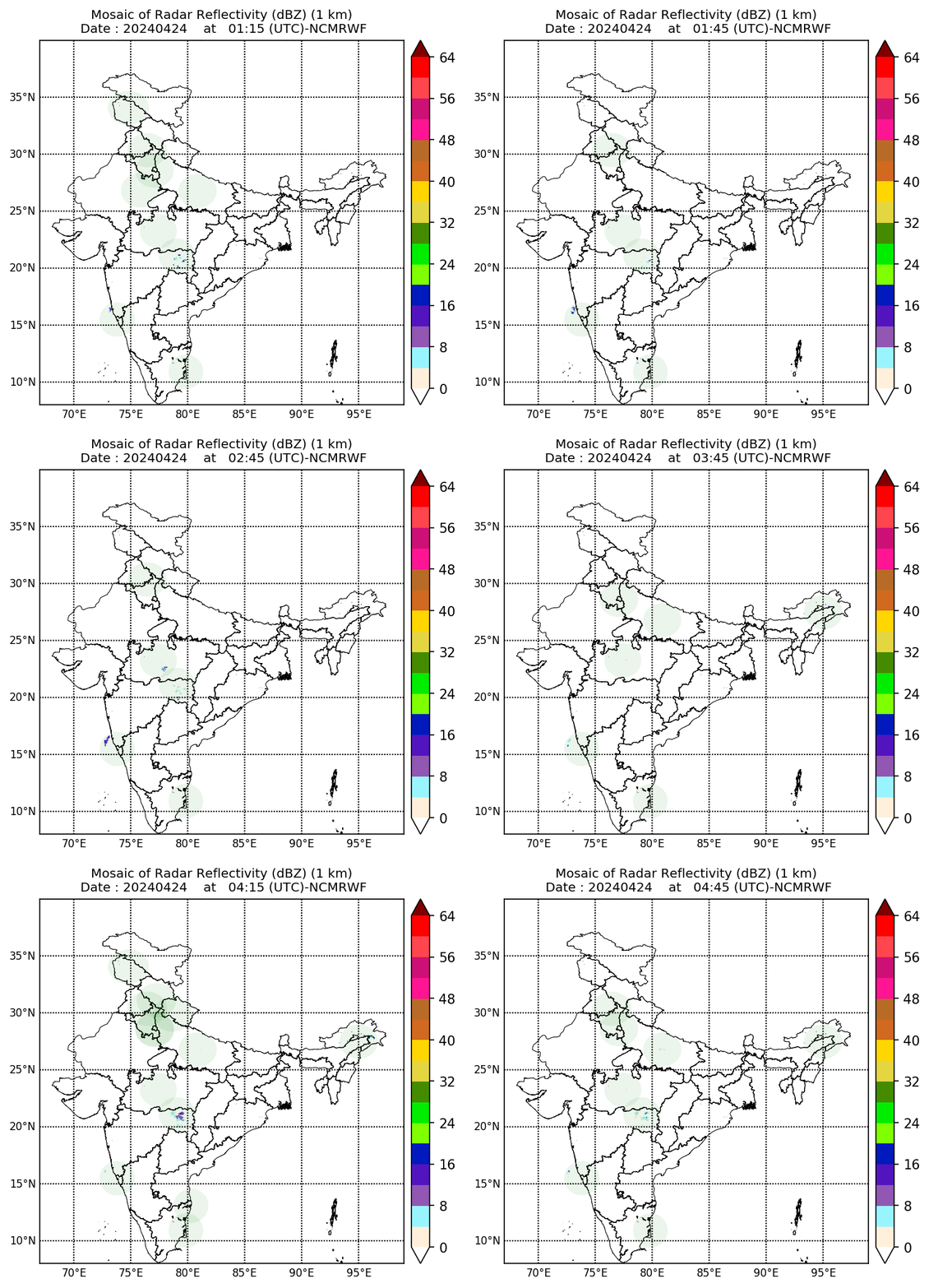
Latest Settelite Image recieved from India Meteorological Department Showing Mosaic of Radar Reflectivity.